Life-Changing Matchmakers
03 May 2026
Canines for Service pairs vets with transformative dogs
May-June 2026
Written By: Joe Jancsurak | Images: Madeline Gray
Military service changes a person. For some, the training, discipline, and camaraderie enable them to lead productive lives. For others with post-traumatic stress disorder (PTSD), military sexual trauma (MST), and mobility issues stemming from sustained injuries, life is a struggle for them and their families.
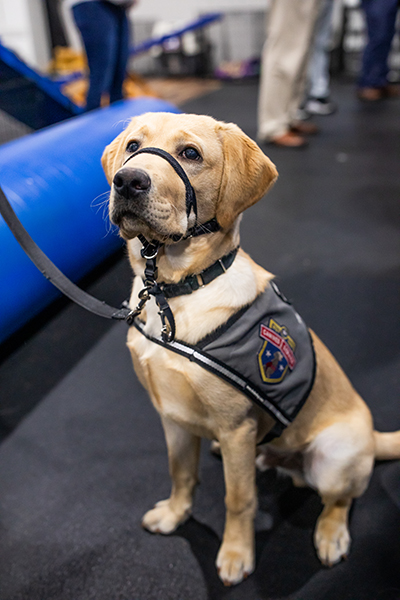
Thankfully, help, along with a healthy helping of unconditional love, is available via service dogs that have “graduated” from the Canines for Service training program. Two talented graduates, both Labrador Golden Retriever mixes named Blaze and Henry, were recently celebrated along with Marine Corps Veteran Daniel Jimenez and Navy Veteran Chris Campbell during a placement ceremony attended by friends, family, staff, and fosters at the Canines for Service location on Old Dairy Road in Wilmington.
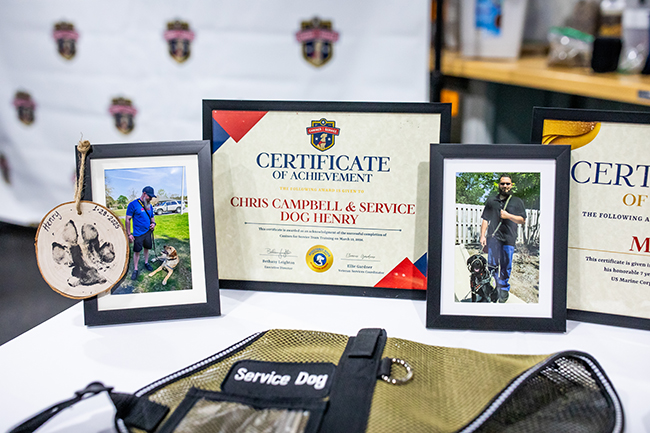
For Campbell, Henry aids him with mobility issues, while supporting feelings of anxiety and anger stemming from Campbell’s PTSD—all of which prevented him from maintaining substantial gainful employment. In a video prepared for the placement event, Campbell says that the help Henry provides him keeps him alert and calm. “I’ve regained my freedom; I’m more relaxed; and I’m sleeping better. And I was able to reapply for my old job from eight years ago because Henry was there for me. I am grateful to the staff, fosters, and everyone who impacted Henry’s training.”
Blaze aids Jimenez in overcoming challenges from his spinal injuries by bracing for stability, opening doors, and retrieving items. And when Jimenez’s PTSD triggers nightmares that need to be interrupted, Blaze provides physical support and a gentle means for waking him and bringing him back to reality. “Blaze’s youthful energy and intelligence make him a perfect match for me,” says Jimenez, whose first service dog, Micah, passed away a year ago. “With Micah, it was like catching lightning in a bottle. I don’t know what you call it when it happens a second time. I can’t thank the fosters and Canines for Service staff enough for all the training that benefited Blaze and me.”
How the Magic Happens
Henry and Blaze are just two of the 98 service dogs Canines for Service has successfully placed with veterans since its inception in 1996. Today, it partners as many as eight service dogs annually. These magical matches are a result of a thorough application and vetting process for the veterans and a two-year training effort for each dog, says Bethany Leighton, executive director at Canines for Service.
For the veterans, the process includes medical and mental health forms, verification that injuries are service-related, and staff interviews with references and the veterans themselves. That information is then presented to a committee comprised of Leighton, a mental health therapist, an orthopedic surgeon, a retired veteran, and other program staff. “It is not a quick process,” says Leighton, who grew up on military bases around the world, “but the steps involved ensure that we are serving the needs of those veterans who need our services the most.”
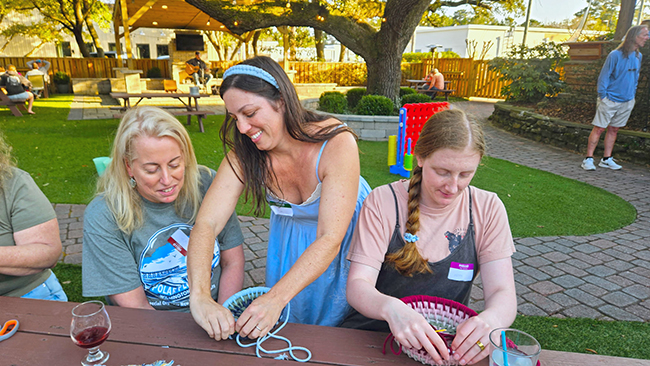
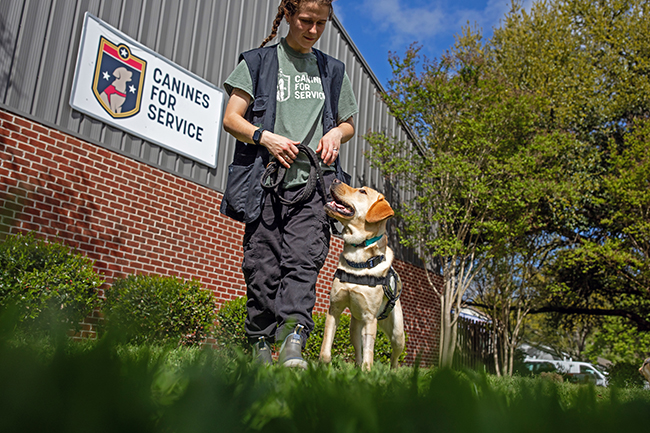
As for the dogs, purpose-bred puppies arrive from various breeders and organizations—some are donated, others are purchased—when they are eight weeks old. Fosters care for the puppies, of which there are four to eight at any given time, until they reach eight months and begin training at Canines for Service. Weekend fosters, dog walkers, and volunteers help provide the 20 or so adult dogs with confidence-gaining canine enrichment, kennel assistance and maintenance, administrative help, and event support, all of which enable a staff of 12, including four full-time trainers, to provide veterans with life-changing canine partnerships.
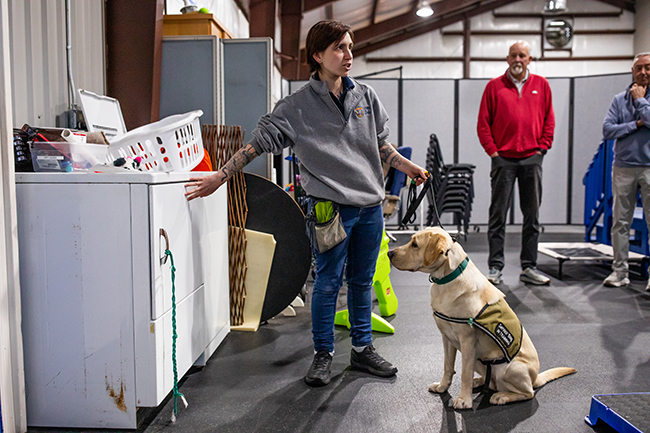
“We are incredibly grateful for the dedicated volunteers who commit their time in meaningful ways,” says Melissa Blackmon, development director.
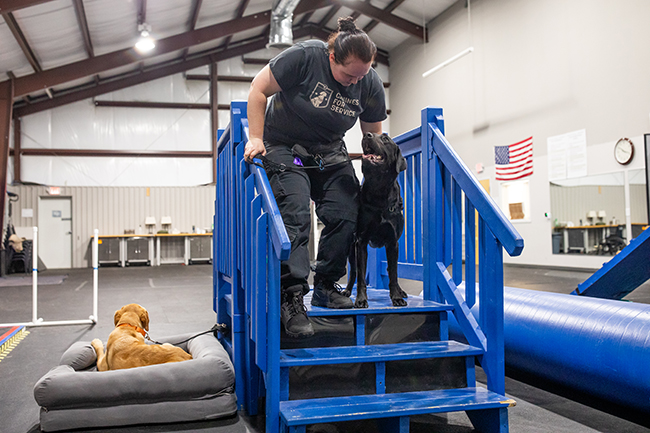
Not all the dogs go on to become service dogs—more than half will have a change of career and become therapy dogs and/or family pets—but those that do will have spent two years in training, learning a variety of tasks that include turning on lights and activating automatic handicap buttons with their noses; pushing door levers with their paws; helping with laundry day in a variety of ways; and being a good travel buddy. Learning aids for these tasks include a wall of toggle and pushbutton switches; handicap access door panels; a clothes-dryer door with a specialized training rope; a row of airplane seats; and, of course, service vests/harnesses that help signal “active duty” for the dogs. These are just a few of the tasks taught and apparatuses used by the trainers.
While Canines for Service’s primary mission is to serve veterans, Erin Lewis, outreach and communications coordinator, speaks to the organization’s therapy-dogs effort, a 6-week Canines for Therapy course led by a contracted professional trainer for breeds of all types and their owners. “It’s important to recognize the difference between our service and therapy dogs,” explains Lewis. “The former serves one veteran while the latter provides emotional support to groups at nursing homes, hospitals, and schools. Both are important, but it is the service dogs and their training that remain the core piece of our mission.”
Ongoing Support and Needs
Having achieved accreditation through Assistance Dogs International, a worldwide coalition of non-profits that train and place service dogs, Leighton says her organization isn’t just about providing veterans with dogs. “The dogs are more than that: they are important tools that enable veterans to mitigate their disabilities.”
What is the dollar value of these four-legged tools? About $50,000, none of which is paid for by the veterans themselves. That covers training, boarding, food, and healthcare. What’s more, the support doesn’t stop once the dogs is placed. “We provide continuous follow-up support training as needed,” says Lexi Dilena, programs director.
Having lost a Wounded Warriors grant worth $300,000 (or 25 percent of its funding) earlier this year due to federal budget cuts, now, more than ever, relies on the generosity of private donors and the local business community.
“We will always strive for best practices and a high standard of training as we continuously look for ways to grow our program to meet the increasing needs of our veterans.”
To learn more about Canines for Service and opportunities to donate and serve, visit caninesforservice.org.