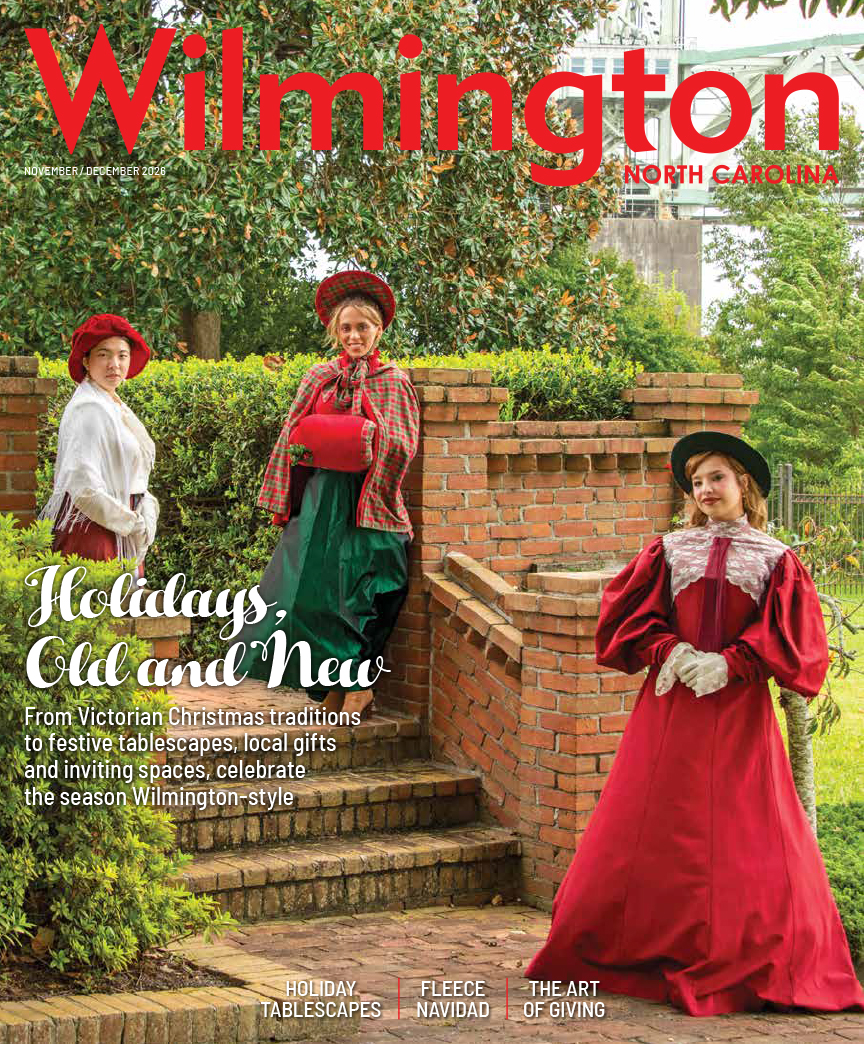
Houses and Holidays Past
02 Nov 2026
Three historic Wilmington homes bring holiday traditions to life on the Old Wilmington by Candlelight Tour
Nov/Dec 2026
Written By: Rachel Lowell | Images: Daria Amato
Models: Rachel Lowell, Erin Madruga, Alivia Novello & Jasmine Olson
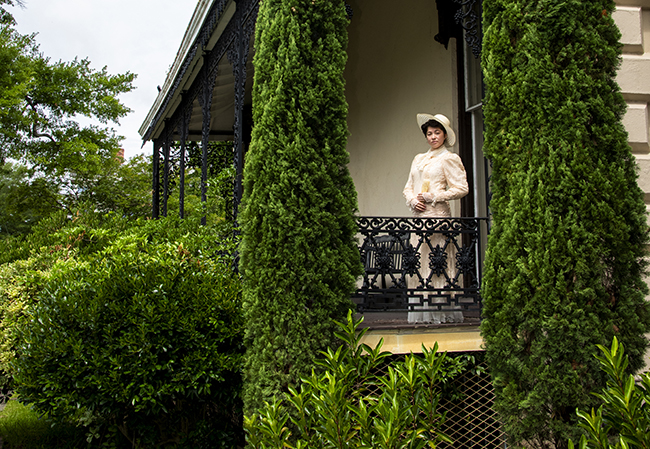
What did the holidays look like before electric lights illuminated Christmas trees, the Macy’s Thanksgiving Day Parade filled television screens, and crowds counted down to midnight on New Year’s Eve? In historic Wilmington, the answer could lie in the homes themselves.
Many of the traditions we now consider timeless were still taking shape during the 19th century. Thanksgiving, Christmas and New Year’s Day were federally recognized in 1870, cementing their importance in American culture. In the Victorian era, grand houses were the heart of holiday celebrations. Three Wilmington houses, spanning more than a century of architectural and family history, offer a glimpse into how those traditions took shape.
Thanksgiving at the Parker-Saunders House
By the mid-19th century, the Parker-Saunders House was already part of Wilmington's growing urban landscape. In 1844, John A. Parker — a house, sign and ship painter — purchased the lot at 401 S. Front St. for $600, where a house was constructed for him and his wife, Margerett A. Alway. John S. Norris, a New York architect who was in Wilmington constructing the 1843 Custom House, likely designed the house.
The house changed with the city’s fashions. Originally built of brick and later stuccoed, it was eventually covered with wood siding and given fashionable Italianate details in the 1870s. From 1871 to 1904, Charles H. Robinson, a commission merchant, and his wife, Elizabeth White, owned it and welcomed notable guests into their home. Their friendship with the Rev. J.R. Wilson, who arrived in Wilmington in 1874 with his wife and their son, Woodrow, brought the future president through its doors. While away at college, Woodrow Wilson often stayed with the Robinsons on his visits home to see his family.
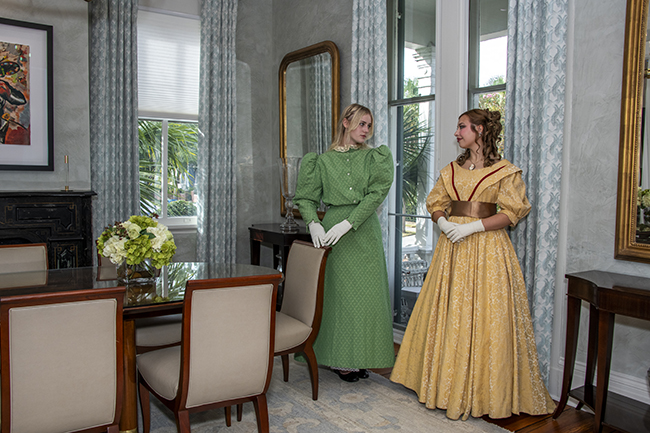
The house's history of hospitality provides an appropriate setting for Thanksgiving, a holiday whose 19th-century development was closely tied to the American home and family. Thanksgiving had been celebrated as a harvest festival in different places and on different dates throughout the country in the early 19th century. Sarah Josepha Hale, editor of Godey's Lady's Book, spent decades advocating for a national Thanksgiving holiday and promoted her cause through recipes, stories and household advice. Finally, in the throes of the Civil War, President Abraham Lincoln answered her plea. He issued a proclamation declaring a National Day of Thanksgiving, calling on Americans to use the day to reflect on what had been lost during the country's ongoing deadly conflict.
While some aspects of the Victorian Thanksgiving feast look different from today, the key elements remain standard. A Victorian Thanksgiving table might feature turkey alongside oysters, seafood, potatoes, cranberry dishes, elaborate sauces and several varieties of pie. Seasonal decorations brought the outdoors inside, with pumpkins, autumn leaves, dried grasses, grains and chrysanthemums commonly used. Thanksgiving had become a carefully constructed domestic celebration by the time of its national distinction. Food, decoration, hospitality and family all played a role. In a Wilmington house where generations of residents welcomed friends and distinguished guests, the holiday was as much about gathering around the table as about what was placed upon it.
Christmas and the Cameron-Newkirk House
Long before Christmas trees became a staple of American living rooms, the Cameron-Newkirk House was looking out over the Cape Fear River. Located at 510 Surry St., the Federal-style residence was built in 1800 for George Cameron, a Scottish-born sea captain, and his wife, Esther Eastwood, a Virginia native. Cameron first sailed into Wilmington in 1798 as master of the Cecero, a brig carrying passengers and freight. Two years later, he returned to the port and purchased property along the river. Later generations of the Cameron family made a name for themselves in local civic and business institutions and are memorialized through recognizable buildings such as the Cameron School of Business at UNC Wilmington and Rachel Trask Cameron Hall at Cape Fear Academy.
In 1910, Catherine Voss Newkirk and her husband, Haywood Francis Newkirk, purchased the property, and it remained in their family for nearly six decades. In 1973, the Wilmington Housing Authority transferred the house to the Historic Wilmington Foundation, which saved the home from destruction by moving it across the street to its present location. Today, the house retains reminders of Wilmington's maritime past, including remnants associated with the Cape Fear Iron Works and pilings from the Cassidy Shipyard. Set on three lots overlooking the river, it is easy to imagine how a 19th-century holiday gathering might have taken advantage of both the home's historic interior spaces and its expansive gardens overlooking the waterfront.
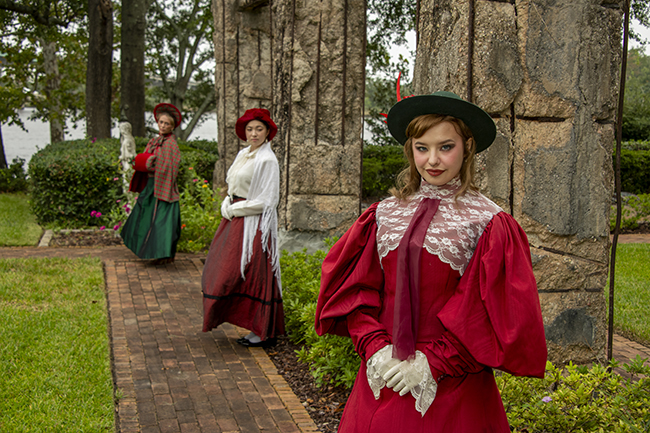
By the mid-19th century, Christmas was undergoing its own transformation. Once primarily a religious observance accompanied by some gift-giving, it increasingly became a family-centered celebration filled with decorations, food, presents and children's activities. The Christmas tree was among the most recognizable new traditions. The custom had German roots and was popularized in Britain by Queen Victoria and her German-born husband, Prince Albert. In 1850, Godey's Lady's Book published a modified version of an 1848 engraving of the royal family gathered around their Christmas tree, spreading the trend to American households. But these Victorian Christmas trees were not quite like the ones filling living rooms today. They were often small and placed on tables or other raised surfaces, decorated with candles, fruit, sweets, nuts, paper ornaments and handmade crafts. Greenery such as holly, ivy, mistletoe and evergreen branches filled the rest of the house.
The holiday increasingly became centered on children and Christmas morning gift-giving. Santa Claus, too, was taking on his familiar personality. Clement Clarke Moore's 1823 poem, “A Visit from St. Nicholas,” helped establish the lore of a benevolent Christmas gift-giver, while Thomas Nast's illustrations during the Civil War helped shape the familiar image of the jolly old Santa Claus Americans recognize today.
During the Victorian era, in a house like the Cameron-Newkirk, Christmas was about gathering and bringing family and friends together in a home whose history was already intertwined with Wilmington's commerce, river traffic and community life.
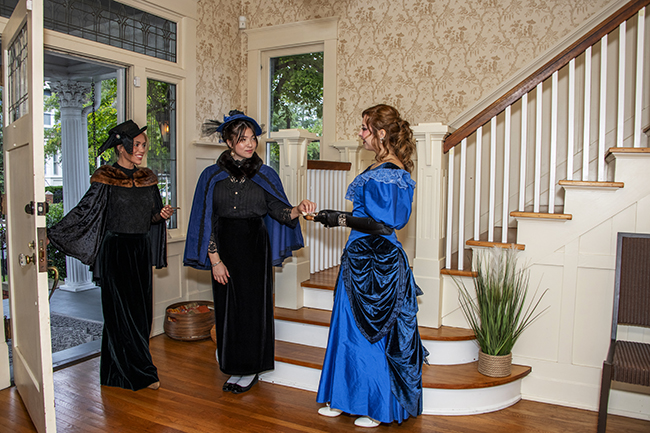
New Year’s at the McClammy-Powell House
By the time the McClammy-Powell House was built in 1914, Victorian-era holiday traditions, including the increasingly social New Year’s celebration, had taken a familiar shape.
Richard Price McClammy, editor and publisher of Wilmington's Evening Dispatch, built the house for himself and his wife, Jane L. Bryan. McClammy later gave the home to his daughter, Janie Louise McClammy Matthews, who eventually sold it to Carl Flay Powell Sr., a grocer, and his wife, Edith Corbett, a schoolteacher. Among the house's surviving details are the distinctive “lilies in lead” glass sidelights surrounding the front door. The front door itself offers a fitting image for New Year's Day because one of the holiday's most important traditions was not what happened inside the house, but who came through the door.
In the 19th century, New Year's Day was a major occasion for social visiting. Friends, relatives, neighbors and acquaintances called throughout the day, offered good wishes for the year ahead and accepted refreshments along the way. The holiday emphasized personal connections and maintaining one's place within the community. At the beginning of the Victorian era, New Year's traditions often overlapped with Christmas. Jan. 1 remained part of the traditional Twelve Days of Christmas, and customs such as wassailing and exchanging gifts could occur around both holidays. Throughout the century, however, gift-giving increasingly moved toward Christmas, while New Year's became more strongly associated with visits and social calls. By the turn of the 20th century, New Year’s Eve itself had become a public celebration in many American cities, as electric lights and synchronized clocks made large evening gatherings possible and helped transform the holiday’s longstanding tradition of social connection into the communal celebrations associated with New Year’s Eve today.
For a Wilmington family connected to the newspaper business, the social world of New Year's Day would have been familiar territory. The holiday offered an opportunity to welcome people into the home, renew friendships, exchange good wishes and begin another year as part of a community.
Historic house research often leaves gaps between the building itself and the everyday lives of the people who lived there. Unfortunately, few surviving records tell us exactly how the families who lived in these three houses celebrated Thanksgiving, Christmas or New Year’s. Instead, local newspapers, advertisements and church notices help place these families within 19th-century America's changing holiday traditions. The surviving evidence gives us pieces of the larger story. During the holidays, Wilmington newspapers advertised the foods families could purchase for holiday dinners, announced special church services and social events, and documented the success of traditions such as New Year’s Day calling. National publications such as Godey’s Lady’s Book also circulated in Wilmington and helped introduce readers to changing holiday customs. A house can preserve its architecture, objects and stories, while the everyday details of a particular holiday may disappear. Looking at local evidence alongside the broader American history of these traditions allows us to understand both what we know and what has been lost. It also reminds us that the cheerful holiday traditions we recognize today developed during a period of enormous change in American life.
The stunning houses featured in this article will be open for public viewing during this year's Old Wilmington by Candlelight Tour, a beloved local holiday tradition of more than 50 years that invites members of the public to experience the grand interiors of Wilmington’s privately owned historic houses. This year’s tour will take place Dec. 5 and 6. Tickets are available at LatimerHouse.org.
Rachel Lowell is a fashion historian specializing in the Victorian era, with experience in historic house museums, and is currently pursuing a master’s degree in public history at the University of North Carolina Wilmington.