The Wool Story
02 Nov 2026
At Southern Sheep Company in Richlands, shepherd and fiber artist Melissa Gray turns wool into yarn, art and other useful products
Nov/Dec 2026
Written By: Carin Hall | Images: Madeline Gray
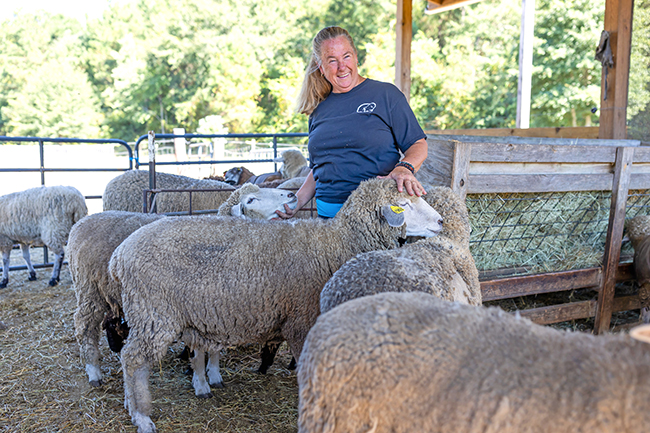
Look for the sheep-shaped signs along the dirt road, pass the donkey and horses to the left and peacocks to the right, and you’ll know you’ve arrived. People drive hours to visit Southern Sheep Company for all sorts of reasons—to watch annual sheep shearing, learn how to turn wool into art or enroll their children in 4-H to name a few. (Fortunately, for Wilmingtonians, it’s just about one hour north).
“My husband was surprised by how many people want to visit,” owner Melissa Gray says. “It’s ‘nuthin fancy,’ he’d say, which is why it used to be named exactly that.”
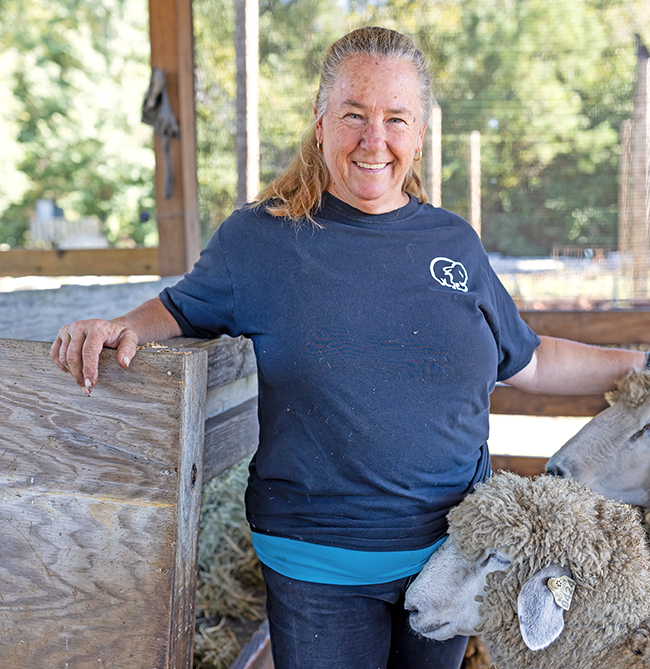
Southern Sheep Company currently has about 45 sheep, including Corriedales, East Friesian dairy sheep, Teeswaters and one Gotland—each with a distinctive fleece. In one pen, the sheep skit away when approached, except for Tip Toe, a bottle-fed as a lamb who follows Melissa around like a Golden Retriever.
The next pen over, another friendly ewe, Girlfriend, nudges for attention as Melissa pulls back varieties of fleece to reveal their varying textures and colors and what it takes to protect their coats through the seasons. Regardless of what it gets used for, make no mistake, “The wool is the point,” she says. “I use everything.”
It’s not easy, of course. People forget the true cost of raising a sheep to breeding age, but Melissa's approach also allows her to keep some prices lower than farmers who rely primarily on meat sales.
“I had somebody ask me a question that really put a spotlight on my philosophy recently,” she says. Another farmer wanted to know how Melissa could charge $22 a pound for lamb while they needed to charge $28.
“Well, one ewe on my farm creates five crops,” she says. Wool becomes yarn, scarves, sculptures, dryer balls and garden pellets, while hides can be tanned and lambs raised for meat or breeding.
Falling Down the Fiber Rabbit Hole
Melissa's introduction to fiber began, funny enough, with a rabbit. She was working as a licensed veterinary technician and crocheting since she was a teenager when someone brought in an English Angora rabbit, which as cloudlike, long billowy hair that she decided to spin into yarn.
She bred Angora rabbits for roughly 10 years and eventually learned from another local breeder that Angora fiber is often blended with wool to make it easier to spin. Then someone offered her and a friend an entire sheep flock's fleece clip for free. Again, she gave it a try, working through maybe 80-100 pounds of wool while teaching herself how to clean, spin and dye fiber. The learning curve was not always graceful as she recalls a sweater she made for her then-toddler son.
“If he had fallen over, he wouldn’t have been able to get back up,” she says.
By the time he was five, he was showing sheep at the North Carolina State Fair with his older siblings, as she continued to hone her craft. It’s been a family endeavor for 26 years and counting.
Wool Isn't Just Wool
One of the first things Melissa teaches people is that wool is not a single uniform material. Of her approximately 45 sheep, Melissa counts 22 Corriedales, 15 East Friesian dairy sheep and fewer than 10 Teeswaters. Her Corriedales grow thick, dense fleeces that help them tolerate cold conditions, while Teeswaters, a heritage breed originating in northern England, are known for their long wool—both used for her needle-felted and Nuno-felted creations. Her one Gotland ewe, Lucky, is a breed prized for its lustrous, curly fleece.
Melissa's farm class, “From Fleece to Fiber,” introduces visitors to what happens after shearing. Participants learn how wool is cleaned, prepared and processed before it can become yarn, felt or other products. Farmers can also send raw fleece to fiber mills to have it transformed into yarn, roving, felt sheets and dryer balls. Coarser fibers can be turned into wool pellets for gardening.
Art Grown on the Farm
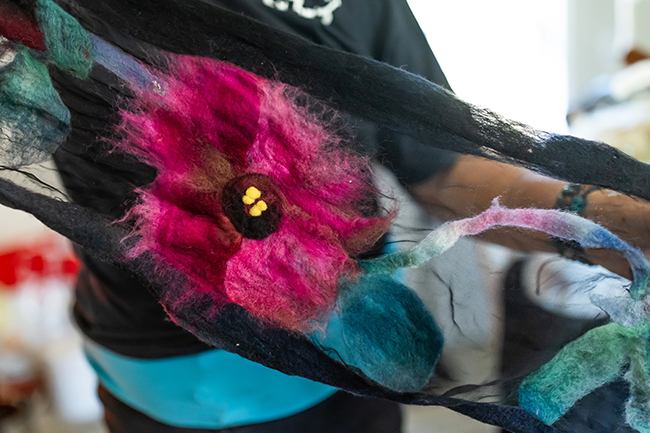
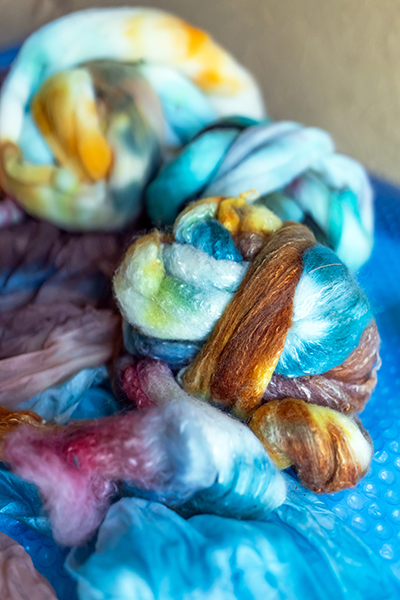
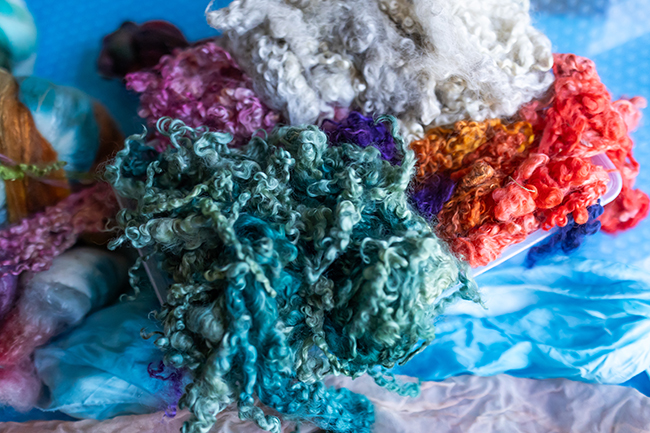
Inside Melissa's studio, she reveals piles of dyed wool and her scarf making process, much of which she was preparing for the Southeastern Animal Fiber Fair. Her Nuno-felted scarves combine wool with silk using a wet-felting technique that bonds loose wool fibers to lightweight fabric. The resulting textiles have texture and movement, with the wool creating ripples and patterns across the silk.
In her home, examples of her work occupy a table: intricately felted animals, sea creatures, hand puppets, scarves, a children's book, and handmade soaps and lotions.
She spent years creating needle-felted sculptures, with work shown through galleries in Wilmington and New Bern and exhibited at Vogue Knitting Live events. One year, she entered a needle-felted bobcat into the Maryland Sheep & Wool Festival’s fine art competition and won Best in Show among approximately 500 entries.
Some creations require months of work, like a felted octopus that took more than eight months to complete. And she likes to get the details right, paying careful attention to eye shapes, facial structures and the animal’s coat. A deer, for example, may appear light brown from a distance but contain individual hairs of cream, copper, gold, dark brown and black. “The animals themselves are growing a coat that is experiencing the world,” she explains.
That approach often gets noticed by the people who know those animals best. Members of a local aquarium took note of the accuracy of her marine life sculptures, which led to collaborating with Melissa to create needle-felted orcas in a private class.
Melissa also teaches at fiber festivals and on the farm, designing projects ranging from wildlife to marine animals inspired by the reef.
And she's a storyteller. In additional to a children’s book (and another in the works), she dabbles in writing fantastical stories of her farm, complete with mythical creatures and adventures inspired by rural life.
“I still believe in magic,” she says.
Boots Made for Working
She supplements the sheep operation with other farm activities, including boarding 12 horses and raising livestock for meat and other products. Eleven livestock guardian dogs help protect animals throughout the property. Others, including her husband and son, Braden, help support the operation. When he overhears us talking about the physical demands of working on the family farm, Braden jokes that military boot camp was easy by comparison.
Melissa herself logs between 12,000 and 18,000 steps a day tending to the animals and property. I’m reminded of a video I saw on her Instagram of her retiring one pair of working boots for another in just six months: “This is what happens when you do everything,” she says. On days she sells her products at Wilmington markets, she sometimes rises at 4:30 a.m. to feed the animals before making the trip.
Her desire to find more uses for each sheep's wool is both an artistic pursuit and a way to cover the costs of keeping the animals she loves. That and perhaps a little ADHD, she admits half-jokingly.
Children begin to arrive for 4-H, a program that teaches them how to care for, handle and show sheep. The sheep that keep on giving. When one girl is asked what she enjoys most about the program, her answer is simple: She just loves being around the sheep. After seeing how much work goes into running the farm, I suspect Melissa would say the same.
This February, Melissa will be conducting her annual sheep shearing event and all are invited to meet the animals, learn more about fiber arts and enjoy food samples and vendors.
Visit southernsheepcompany.com