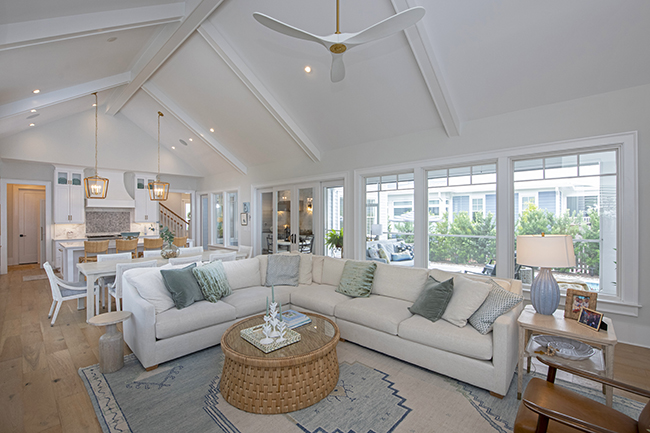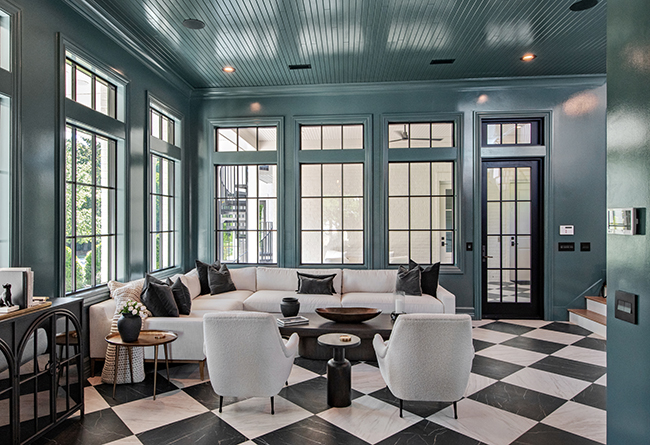
Living Masterpieces
03 Jan 2026
Design NC returns with fresh inspiration from two visionary creatives
By Carin Hall

Each spring, Wilmington’s creative community looks forward to a few signature days at the Cameron Art Museum (CAM). Design NC, now in its seventh year, has become one of CAM’s most anticipated annual traditions, appealing to design lovers, students, gardeners, architects, and anyone who simply loves a beautiful space (jumping up and down, raising my hand).
This year’s theme, “Living Masterpieces: A Celebration of Art and Design,” brings the museum’s mission into the home—inviting attendees to explore how art, interiors, and landscapes shape the way we live. “Sometimes we think that art only belongs in a museum or gallery,” says CAM Executive Director Heather Wilson. “But this event reminds us that art can inform our homes, our outdoor spaces, and the way we live every day.”
Design NC began in 2019 when a handful of local design leaders—including John Jordan and Liz Carroll—envisioned a Southeastern-style design forum that could raise funds for CAM while elevating Wilmington’s vibrant design community. Today, it is CAM’s most successful annual fundraiser, directly supporting exhibitions, economic accessibility programs, and year-round art education for more than 70,000 people, including 8,000 children.
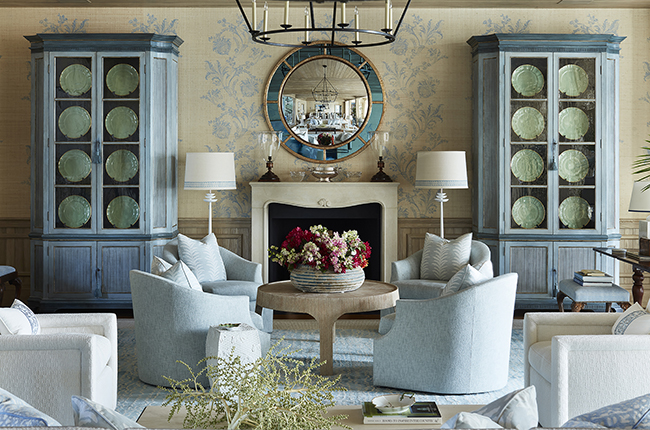
“We truly couldn’t serve our community without the success of this event,” Wilson says. “It brings new people to the museum, sparks creativity, and creates a sense of shared appreciation for design.”
This year, Design NC welcomes two guest speakers whose creative journeys span continents, industries, and mediums: interior designer Marshall Watson and author-designer-photographer Blue Carreon. Though their approaches differ, both speak with the kind of passion that makes design feel personal, joyful, and deeply connected to how we experience home.

Marshall Watson
Watson is no stranger to Wilmington. He was the first-ever Design NC lecturer, and his return this year feels like a full-circle moment—not only for CAM, but for the many locals who admire his work. “There are so many people in Wilmington who know and love Marshall,” Wilson says. “Bringing him back feels incredibly special.”
Watson remembers that first event fondly. “It was a giant success—packed both days,” he recalls. “And Wilmington’s audience was extraordinary.”
Known for interiors that feel refined and personal, Watson’s work is rooted not in trends but in the emotional resonance of home. “I have always believed in the power of home,” he says. “I take on clients who are interested in creating a home. I do not take on clients who view their homes as an investment. It's not a real estate venture to me… It is home. And that's very important to me.”
His philosophy blends proportion, harmony, continuity, and light—elements he returned to again and again during our conversation. Designing his own 750-square-foot New York apartment sharpened his awareness of scale and illumination. “In New York, you’re very close to your walls,” he laughs. “Light matters. Proportion matters. Everything matters.”
When the topic of “avoiding trends” came up, Watson swatted away my shameful recovering “Millennial Gray” blindness. “It's just your environment,” he says. “You cannot escape your environment. You can't escape fashion. You can't escape seeing something new or something that appears to be new. So, you're not a victim of that. I mean, the gray was very chic at that time. It was a calming down of the noise that was surrounding us.”
But the pendulum of fads always swings. “It turned into ‘calming down’ to a point where we became very puritanical about it, because [then] there was no color in our lives,” he continues. (He notes a shift almost too far back into another direction that feels more like the 1980s again).
When viewing his work online, in big-name home and garden magazines, and in his books, “Defining Elegance” and “The Art of Elegance: Classic Interiors,” you’ll become familiar with his intentionality, honed over several decades. For many, curating items that work in a particular space can get off track or even fall off the rails into what’s often described as just “eclectic.” We can learn to do better.
At this year’s event, Watson will discuss his best advice on shaping beautiful spaces, including gardens. He’ll discuss how to think like a designer, how to identify proportion and balance, how to reuse and reinterpret what you already own, and how to bring soul into a room.
He’ll also share stories of restoration projects that were on the verge of demolition but reimagined through thoughtful preservation. “I want people to see the possibility in what exists,” he says. “We don’t need to send everything to the landfill. We can reinvent, refresh, and honor the history we have.”
He knows Wilmington’s aesthetic well, offering examples of beautiful homes and people that pique my interest for future storytelling. “Of course, everyone knows New Yorkers appreciate interior design,” he says. “But in the South, you breathe it. ‘Southern hospitality’ extends to the home, and there’s a lot about the art of the home and the art of living from the South that we could learn from.”

Blue Carreon
A writer, former fashion editor, photographer, and creative director of Blue Carreon Home, Carreon embodies what it means to pursue beauty across disciplines. His transition into design began almost accidentally—though looking back, it feels inevitable. “I studied interior design, but fashion fell into my lap,” he says. “Eventually, being close to so many factories in Asia, I decided to create a home collection.”
With nothing but sketches and determination, he brought a suitcase of prototypes to Bergdorf Goodman while pitching his first book, “Conversations,” a lively collection of sixty fill-in-the-blank interviews in which fashion, design and art icons reveal clever, candid and often surprising insights into their lives. The buyer took the book—and then took the collection. “That was my big break,” he says, still sounding amazed.
Today, Carreon’s work blends all the things he loves: interiors, writing, gardening, travel, and photography. His recent book, “Gardens of the Hamptons,” allowed him to enter private landscapes he had admired for years (including Watson’s on the cover). “Honestly, I did the book for selfish reasons,” he admits with a laugh. “I wanted to see what was behind all those hedges.”
The final collection features more than 40 gardens—90% of the images photographed by Carreon himself. But what resonates most is his deep respect for individuality. His design philosophy is rooted in emotion, not trends. “We cannot copy and paste what you see on Instagram or Pinterest,” he says. “The most successful rooms tell a story. They showcase your personality, not jumping on a bandwagon.”
For clients, Carreon and Watson often ask a version of a simple but powerful question: How do you want to live—now and ten years from now? They encourage people to seek timelessness, to be intentional, to mix the new with the old, and to choose pieces that spark connection.
At Design NC, Carreon will share stories from creating “Gardens of the Hamptons,” from conversations with garden owners to his adventures (and misadventures) photographing on-site. He’ll also explore the cultural history of Hamptons landscapes—offering a thoughtful counterpoint to Wilmington’s own love of gardening and outdoor spaces.
When I asked Carreon about the highlights of his career, he didn’t mention any celebrities that you’ll see snapping a picture with him at an event online, but rather very enthusiastically discussed the community of people he’s encountered who just love what he loves. “It’s such a privilege to connect with people who love gardens,” he says. “Passion creates community.”

Attending Design NC 2026
Design NC invites everyone—students, first-time homeowners, seasoned designers, and those who simply love a beautiful space—to learn, connect, and be inspired.
“You don’t need any interior design education to enjoy this event,” Wilson emphasizes. “It’s approachable, it’s fun, and everyone walks away with something they can use in their own home.”
This year’s programming takes place April 30-May 1st and includes:
• Youth Forum at Cape Fear Community College, offering private access to both designers for aspiring students.
• Cocktails in the Courtyard, a lively evening gathering with music, conversation, and the chance to talk with Marshall and Blue one-on-one.
• Friday’s Design Forum, featuring illustrated lectures from both speakers, a Q&A session, and lunch.
With so much enthusiasm surrounding the event, tickets for the forum typically sell out quickly, even as the courtyard event remains open-capacity.
As both designers made clear, beauty isn’t frivolous. The way we shape our homes and gardens has a huge impact on our overall happiness. That’s also backed by research, from countless reports on the impact of gardening on our physical and mental health to studies like the “Good Homes Report” by Kingfisher and the Happiness Institute that discovered homes have a bigger impact on happiness than physical health, income and employment.
It's kind of obvious when you think about it. Or, as Carreon put it: “Home is my favorite place. If I make it beautiful, I want to be there. I want to live in what I’ve created.”
This event is sure to inspire us all to do the same.
Tickets go on sale January 26th. Visit cameronartmuseum.org/design-nc-2026.