Next-Generation Shoppers Bring New Life to Antiquing
02 Mar 2026
Local vendors see a surge of younger shoppers, rebelling against fast furniture and boring décor
Story and photos by Carin Hall
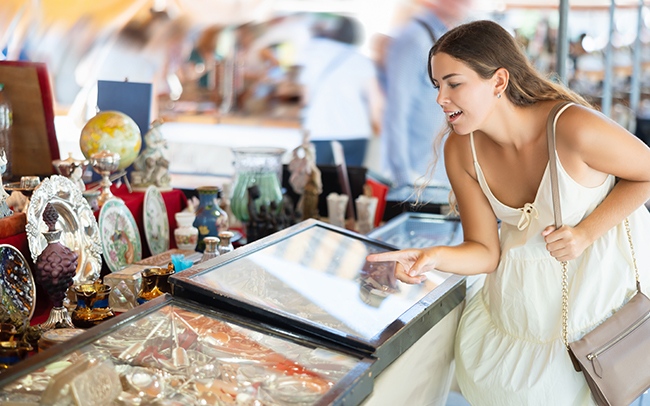
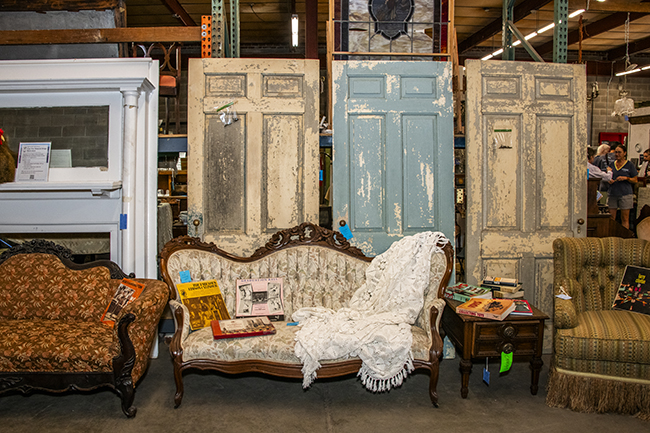
As someone who didn’t grow up in North Carolina, one of the first things I noticed about Wilmington was the sheer number of antique shops. Sure, we have the big-box stores you’d expect in any American town, but there’s only one Target, a long-abandoned Kmart, and the nearest IKEA is nearly 200 miles away. My old, millennial-gray-loving, everything-must-be-organized-into-acrylic-containers self would have scoffed. But I, like many, have abandoned previously trending aesthetics for something more personal: style that tells a story and furniture with details and made from non-synthetic wood.
Renowned interior designer and guest speaker at this spring’s Design NC event, Marshall Watson, told me not to be too hard on myself for mimicking trends, which are often indicative of an emotional reaction. “It was just our environment,” he says. “Gray was very chic at that time. It was a calming down of the noise that was surrounding us.” In other words, a backlash to the stress and clutter many millennials grew up around.
But sometimes trends go too far. “It got to a point where we became very puritanical about it, because there was no color in our lives,” he continues. “There's been a resurgence and a cacophony of color… a resurgence in the world of real antiques,” referring to items that are over 100 years old to meet the definition.
Several Wilmington shop owners also say the energy has shifted dramatically in recent years. At Baker Street Curiosity Shop, owner Kelly Lee says a growing share of her customers are young—sometimes overwhelmingly so. “We have a lot of young people, a lot of college kids,” she says, estimating that at least 30% of shoppers are under 30, with some days spiking far higher.
Her shop—an immersive, dig-and-discover kind of place—has become the sort of destination that travels well on social media, whether she’s on those apps or not. “Some of them put us on TikToks,” she says. “We have a uranium glass room. I think that went viral.”
Not far down the street, at FleaBody’s Antique Mall, Jody Dorsey has watched the same wave crest, with a 20-year perspective. She’s born and raised here, and her business has ridden recessions, trends, and the steady churn of Wilmington neighborhoods. In 2018, Dorsey noticed a dip as shoppers leaned into online retail—Wayfair, Amazon, IKEA—and a minimalist look that often prioritized convenience over character. But the pendulum swung back, and this time it came with hashtags.
“The biggest thing that is going on now—and it’s not just in Wilmington, it’s nationwide—is a huge trend towards thrifting and antiquing,” she says, crediting Gen Z and younger millennials.
Shopping as content might be one of the simplest explanations for the current antiques boom. Dorsey describes a feedback loop powered by social media: “You go on TikTok… they’re doing thrift hauls. They’re doing ‘come thrift with me,’ ‘come antiquing with me.’” Suddenly, a Saturday spent rummaging isn’t just a hobby—it’s an aesthetic, a storyline, and sometimes a competitive sport.
Beyond algorithms, however, the trend appears to stem from some strong emotional pulls as well. Gen Z shoppers, she says, are coming of age at a moment when their grandparents’ homes—full of familiar textures and objects—are beginning to disappear. “What is driving that is the Gen Z’s grandparents… are passing away,” she says, and with that comes a surge of nostalgia and sentiment. They’re not just buying a lamp or a dish; they’re buying a feeling.
At Baker Street, Lee sees that same hunger for tactile history, especially in the growing obsession with vintage glass. “They like the old glassware,” she says. “Anything that goes on TikTok [like that] all of a sudden, everybody wants it.”
More than its virality online, though, people are simply tired of buying things that don’t last. “I think they’re figuring out that IKEA or press board stuff doesn’t last, and they can get quality pieces that are going to last forever,” Lee says.
It’s not only about sustainability or “saving things from the landfill” (though that’s part of the appeal); it’s also about escaping the sameness of mass production. Dorsey sees the same motivation in her shoppers’ desire for uniqueness. In an antique store, she says, you don’t see what you see at big-box retailers or online marketplaces. You see items with quirks, patina, and one-of-one storylines—and that’s the point. “They want to have different things than their roommate… They’re wanting to be self-expressive,” she says.
So, antiquing isn’t just collecting anymore—it’s identity-making.
Zooming in on the Wilmington scene, a few micro-trends have become apparent. Lee says younger shoppers are chasing vintage glass and clothing, as well as “doilies,” which she calls out as a surprising comeback. Her store has also felt the shift from mid-century modern dominance into newer nostalgia cycles. “Now they’re into the ’80s… and ’90s,” she says. “They want the touch lamps. They want the neon stuff.”
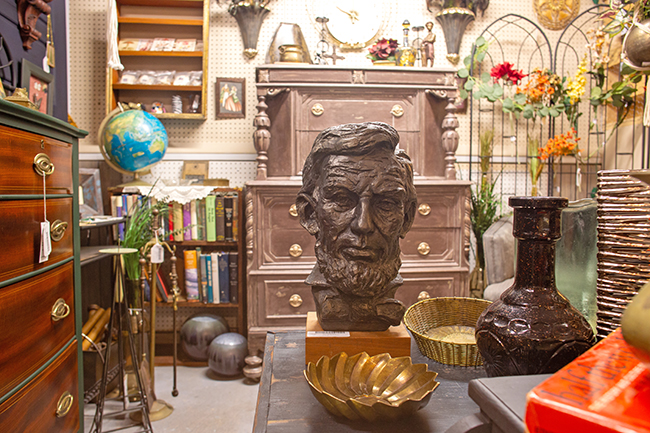
At Port City Peddler, Kaye Hamm sees another set of revived classics moving quickly: silver and china—especially when used in fresh, non-traditional ways. “Silver pieces… it doesn’t have to be sterling,” she says. “People are using a lot of silver again.” Shoppers are repurposing pieces like styling silver and china vessels by sinks or in unexpected corners, creating vignettes that feel curated, not formal.
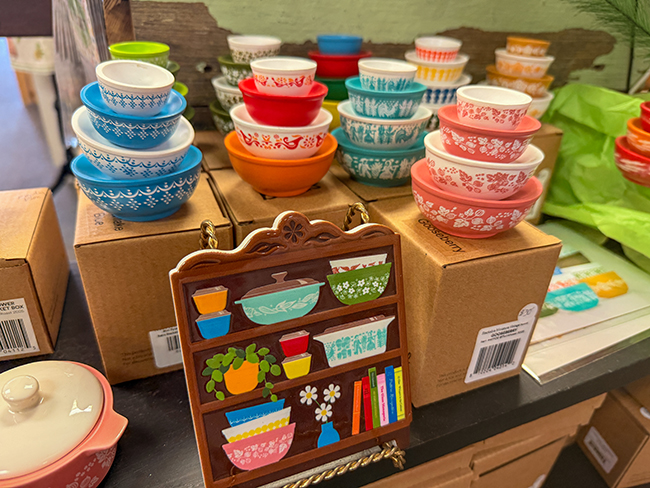
Hamm also points to “tablescaping” as a major driver. People don’t necessarily want a full inherited set of china, but they do want a few standout pieces to mix with modern basics. That trend, she says, is tied to something bigger: entertaining is back. And then there are the collector obsessions—Pyrex, milk glass, jadeite. Hamm says younger shoppers often pick a category and hunt it with real intention (and real budgets). It’s not bargain-bin energy; it’s treasure-hunt energy.
Of course, Wilmington’s antiquing culture isn’t happening in isolation, but it is helping drive more shoppers from surrounding areas. According to what Lee has heard from these visitors, many believe the selection here is better than some of the larger cities in the state and even this side of the coast.
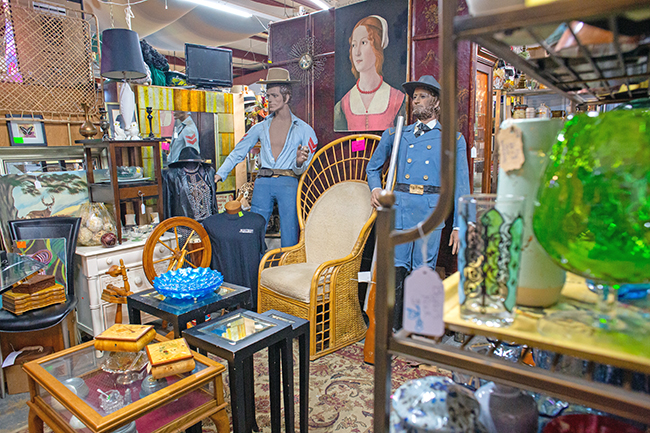
That makes sense considering Wilmington’s history, rich with older homes, older families, and a long thread of coastal living that shows up in what gets sold, saved, and passed down. Another part of it has to do with variety, full of a mix of shops with distinct personalities. Some shops are highly curated; others are more “dig,” where the joy is in the search.
“We get new things every day,” Lee says, urging shoppers to look “up and down” because the best finds aren’t always at eye level.
That mix matters because “thrifting” and “antiquing” aren’t interchangeable anymore, especially to the people building businesses around them. “I don’t consider myself a thrift store,” Hamm says. Her inventory is curated, and that curation is labor. To the casual shopper, an antique store can look like a slow and charming job, but for most shop owners, sourcing is a mix of old-school, time-consuming methods: estate sales, yard sales, and selective thrifting (sometimes she finds pieces at thrift stores, repairs them, and sells them in her shop).
“Everybody comes in, they see the 9 to 5. They don’t see the 5 to 9,” Dorsey echoes, describing the behind-the-scenes grind of sourcing and processing inventory.
I couldn’t resist asking the question they get all the time: “What’s the weirdest thing you’ve sold?” Hamm once bought a birthing chair, while Lee mentions everything from wet specimens and taxidermy to an “antique child’s casket… with a viewing window” arriving at her shop.
But the most revealing “finds” aren’t always the freaky ones. Hamm talks about the satisfaction of seeing a piece land somewhere permanent and meaningful, like the grand, ornate desk she touched up that now sits in the beautiful historic Thalian Hall. “It's a very nice piece of history that is going to move on and continue to be,” she says.
Lee also treasures her uranium glass collection because it’s become rarer as demand grows, and because it took years to build. Meanwhile, Dorsey has a hard time naming just one thing, but points to some “palace vases” about as tall as I am on a tour around her shop.
After speaking with a few vendors, I was pleasantly surprised to discover their interconnectedness. They all talk, send customers to each other, and watch each other’s backs. Hamm says local stores regularly recommend one another and will even call around when a customer is searching for something specific.
That spirit shows up in practical ways like referrals and cross-promotion, but also in moments that matter more. When Lee’s husband was in a terrible car accident, the antique community rallied. “All the shops banded together and paid my rent,” she recalls, describing support that ranged from money to groceries to vendors working for free to keep her business open.
If you’re wondering whether this boom is a fad, Dorsey offers a longer view. Trends cycle, generations change, and life stages influence what people buy. She recalls hearing an older dealer predict that millennials would return to antiques once they married, bought homes, and started having kids—and she says it proved true.
Now Gen Z is arriving even earlier, fueled by social media and a craving for individuality. The bigger question may not be whether antiquing will stay popular, but how it will evolve. Hamm notes that some old aesthetics—like painting everything white—are losing steam, even among dealers who sell paint and do refinishing work.
“We just want—no, we need—something interesting, something colorful, in our homes,” says a shopper, holding up a colorful trinket she found with excitement as evidence. She overheard my rant about this topic with Deb Harmon, who you’ll find most days at the Curiosity Shop.
Shoppers seem to also be moving toward moodier, more personal interiors. Rooms that look lived in, not staged. And in Wilmington, the market itself is responding. Dorsey predicted more shops would open and says several have announced plans recently, drawn by the momentum.