Where Veterans Build What’s Next
03 May 2026
Quality Work Force is creating career pathways for veterans through hands-on trade training
May-June 2026
Written By: Jen Reed
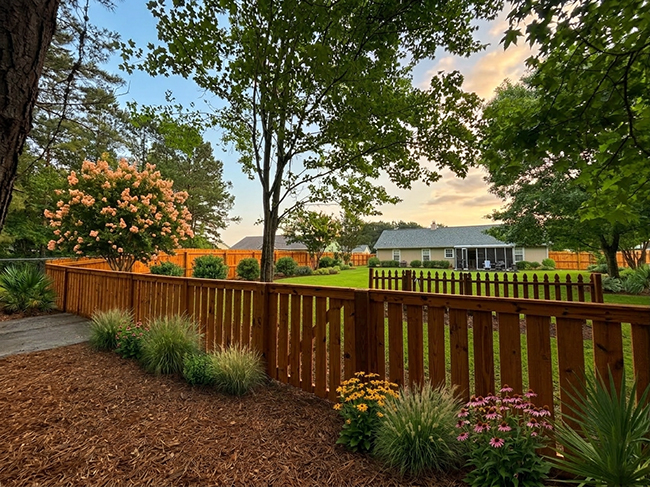
On any given job site in southeastern North Carolina, the work might look familiar—posts set in the ground, fence lines stretching across a backyard, or crews running fiber optic cable toward a home. But behind the tools and trucks, something deeper is taking shape.
For the team at Quality Work Force, the job isn’t just about building fences or connecting internet lines. It’s about building the future and, in many cases, redefining life after military service.
The company, officially launched in August 2025, grew out of a simple but powerful idea: what if the discipline, work ethic, and leadership skills developed in the military could be paired with structured training and real-world job opportunities?
That idea began to take form more than four years earlier in Sneads Ferry, when Jeremy Black, a retired U.S. Marine Corps sergeant major, was running a fencing operation. Like many veterans who transition into civilian business ownership, Black had built something solid, but he wanted more. Not just growth, but purpose.
He reached out to his former employee Kelley Dunne, who had served in the U.S. Army Signal Corps and had built a career in telecommunications. Around the same time, Dunne was in conversations with his neighbor Rob Kaplan, an investor interested in backing businesses with both growth potential and meaningful impact.
What started as a few conversations quickly evolved into something bigger.
“We realized there was a natural fit,” Kaplan said. “You had a functioning veteran start up business, you had expertise in fiber optics, and you had this shared desire to create real opportunities for veterans.”

That vision became Quality Work Force, a company with a focus on utilizing a workforce training program designed specifically for transitioning service members and underemployed veterans. Through a partnership with Next Level Communications Warrior Workforce Program, the company offers a structured pathway into skilled trades for veterans.
The model is straightforward but ambitious: 200 hours of formal training, certification and OJT experience, that qualifies as a pre-apprenticeship, with the ability to continue on a 2,000+ hour apprenticeship. It’s not just classroom learning; it’s hands-on, real-world experience from day one.
And importantly, it’s work that matters.
The fencing side of the business remains rooted in southeastern North Carolina, where it continues to serve homeowners while expanding into nearby markets like Wilmington, with plans to reach as far south as Southport and west toward Fayetteville. These jobs are often completed quickly, sometimes in just a few days, offering immediate results and visible impact.
But fencing is only part of the equation.
The company’s fiber optic division operates on a much broader scale, taking on projects across the southeastern United States and into the Midwest, including active work in Ohio, Georgia and Virginia. Kaplan describes this work as “the last mile”—the critical final connection that brings high-speed internet from a larger network directly into homes and businesses.
“These are projects that can last for months,” he said. “They require coordination, technical skill, and consistency. It’s a different pace than fencing, but it opens up a whole other set of opportunities.”
That dual structure—fencing and fiber—was intentional.
Fencing, while steady, can be seasonal, with slower periods during the winter months. Fiber optic work, on the other hand, tends to be more consistent and often business-to-business. By training veterans in both, Quality Work Force creates flexibility and stability.
Participants in the program are not limited to one path. They can learn multiple trades, build diverse skill sets, and ultimately choose how they want to move forward.
At the end of the program, graduates have options: they can join Quality Work Force full-time, work as independent contractors, or take their skills elsewhere.
“That’s the goal,” Dunne said. “We’re not trying to hold onto people—we’re trying to prepare them for not just a job, but a potential career.”
The partnership with Warrior Workforce Program has also made it possible to scale beyond North Carolina. By building trained crews in different regions, the company can take on projects across the country while maintaining a consistent standard.
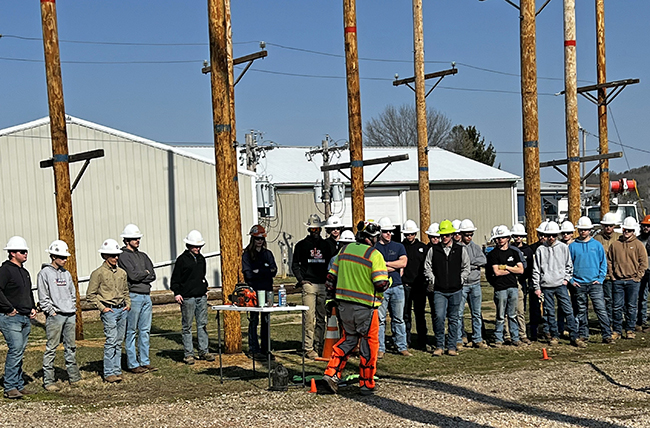
And that standard, Kaplan emphasized, is rooted in the team’s shared background.
“The combination of veterans and skilled professionals on our team brings discipline, attention to detail, and pride in workmanship,” he said. “That shows up in everything—from how a job site is run to the quality of the finished product.”
It’s also shaping how the company itself is evolving.
As Quality Work Force grows, Kaplan envisions a more structured, “corporate” approach to operations—one that includes enhanced quality control, streamlined scheduling, and systems that support both efficiency and long-term expansion.
But even as the company builds that infrastructure, its core mission maintains a human, personal element.
For many veterans, the transition to civilian life can be uneven. Skills don’t always translate neatly. Career paths aren’t always clear. And too often, capable individuals find themselves underemployed or overlooked.
Quality Work Force is trying to change that—not with promises, but with a pathway.
Out on a job site, that might look like a crew working side by side, learning as they go. It might look like a veteran picking up a new trade for the first time. Or it might simply look like a finished fence or a newly connected home.
But underneath it all, it’s something more lasting: a second career taking shape, one job at a time.
For more information, visit go-qwf.com.