Will Wilmington Get Its Own Central Park?
03 May 2026
A nonprofit group is working to preserve Eagles Island and turn it into a major nature park for recreation, education, and ecotourism
May-June 2026
Written By: Vera Wilson
You could call Larry Sackett a nonprofit volunteer extraordinaire. He’s the current president of the New Hanover County Friends of the Arboretum and serves on the board of the local chapter of the Association of Fundraising Professionals, as well as a maternity hospital in Sierra Leone.
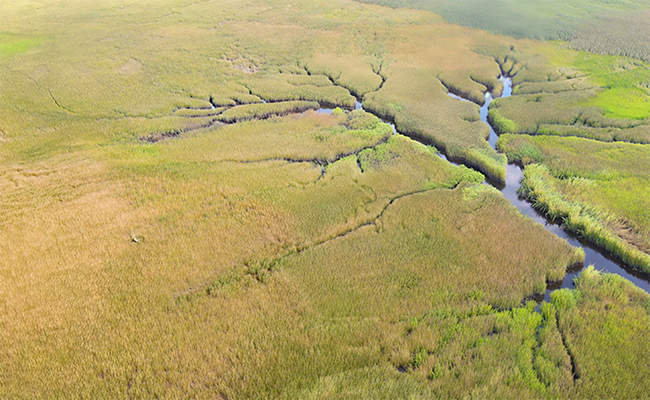
He’s also the president of Eagles Island Nature Park, a nonprofit formed in mid-2024 to support the preservation of more than 3,100 acres of a biodiverse landscape located between the Cape Fear and Brunswick rivers.
“It’s one of my favorite subjects,” he says. Lured to the area by the Battleship North Carolina, he inevitably learned about neighboring Eagles Island and wants to help save it.
If you’ve dined on the riverfront downtown, you’ve no doubt enjoyed a view of Eagles Island, maybe catching it in all its glory as the sun sets behind it. Or perhaps you’ve read in the news about what’s not been happening there: efforts to allow development of the island’s west bank near the battleship have, so far, been stymied.
Sackett says the nonprofit’s intent is just the opposite: to make things finally happen on and for the island. Despite the fact that there’s been an Eagles Island Central Park Task Force in place for many years and a detailed study, known as the Vision Book, that spells out what the nature park could mean to the region and the steps to accomplish it, there’s been little progress to date.
The goal of the nonprofit is to celebrate the island as an ecotourism destination suitable for recreation and to share its rich history and natural treasures. The Vision Book spells out four recommendations:
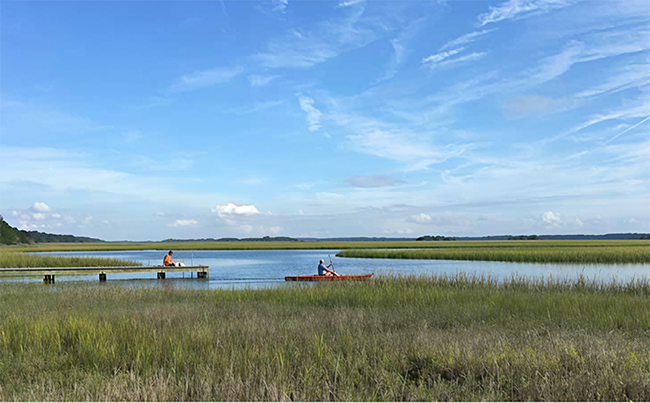
Promote the waterways with route names, maps, and signage
This sounds easier than it is. The island is owned by a hodgepodge of individuals, companies, and governmental organizations; permission needs to be obtained from each one for something as simple as putting up signs on their property. And although people can already enjoy parts of the island, there’s currently no public boat launch on the Wilmington side.
“Right now, this is our focus: to understand the land ownership and rules and regulations required to put interpretive signage in the canals,” says Sackett.
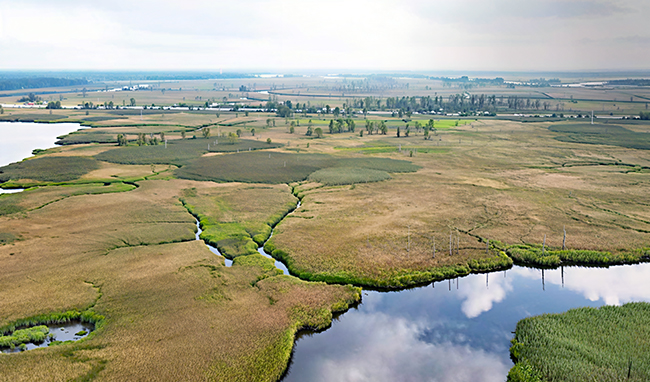
The blueways will primarily run through the remnants of the Gullah-Geechee rice paddies on the northern side of the island, where there’s much to see and enjoy in terms of vegetation and wildlife.
Construct boardwalks, trails, and open-air shelters
Think picnics, ideal photo ops from observation towers and viewing decks, and strolls along the marshlands. The good news is that most of this land is owned by New Hanover Soil and Water Conservation, an ally of the project.
Establish an off-road and pedestrian route
This project would connect Wilmington and Belville, a city alongside the Brunswick River, making the park a true regional destination. Although an existing service road could be used for part of the route, the project requires extensive infrastructure such as elevated walkways, new bridges, and possibly modification of bridges like the Cape Fear Memorial Bridge, no less. Coordination with island owners, local governments, and the N.C. Department of Transportation is key to its success, and the cost will be considerable.
Build an educational center and riverfront park
The most ambitious of the recommendations includes an educational complex, open-air pavilion, museum and theater space, and visitor kiosk, and would put the nonprofit’s fundraising abilities to the test. It would necessitate building on the highest elevation on the island, an area that already deals with sunny-day flooding and is surrounded by wetland soil, so development of any kind will prove difficult. It’s been designated as a brownfield site by the N.C. Department of Environmental Quality, meaning environmental contamination may require remediation. And no one expects developers to give up on their plans for constructing commercial and residential properties. But Sackett’s not discouraged.
“I don’t think our project is dependent on getting this land,” he explains. “There are lots of ways to skin that cat.”
That may mean public-private partnerships or working in conjunction with other nearby educational centers on the drawing board.
Sackett feels the current board is up to the challenge. It includes the current mayor of Belville and a former mayor of Navassa. Located on the Brunswick River, both towns, as Sackett puts it, “punch above their weight” and will certainly benefit from the nature park. The other board members are strong advocates for the environment with experience to match.
“I think we’ve got the right team in place to do this,” he says.
Although the nonprofit will need money to meet its goals, it’s notable that similar projects in other parts of the country have made a positive economic impact.
“I think the ecotourism would be amazing, plus we’re protecting it for the next generation,” he continues. “We think it could be the Central Park of Wilmington.”
For more information about the proposed park, visit eaglesislandnaturepark.org.