Mind Your Manners
01 Sep 2026
Inspired by a Latimer House social media series, a modern-day Victorian explores the elaborate rules that once governed visits, dining and courtship
Sept-Oct 2026
Written By: Jasmine Olson Introduction by Carin Hall | Images: Daria Amato
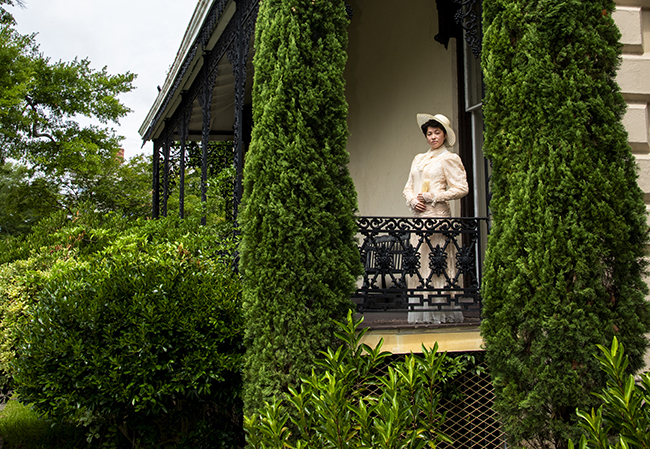
When Jasmine Olson arrived at Wilmington’s Latimer House for her summer internship, she found more than a historic home filled with period furnishings. She discovered a world governed by calling cards, carefully timed visits, silent teaspoons and courtship rituals in which even the smallest gesture could carry social meaning.
As she shared these tidbits of the past, these topics gained more traction online. I, too, was drawn by a glimpse into a world so different from the present day. I had to know more.
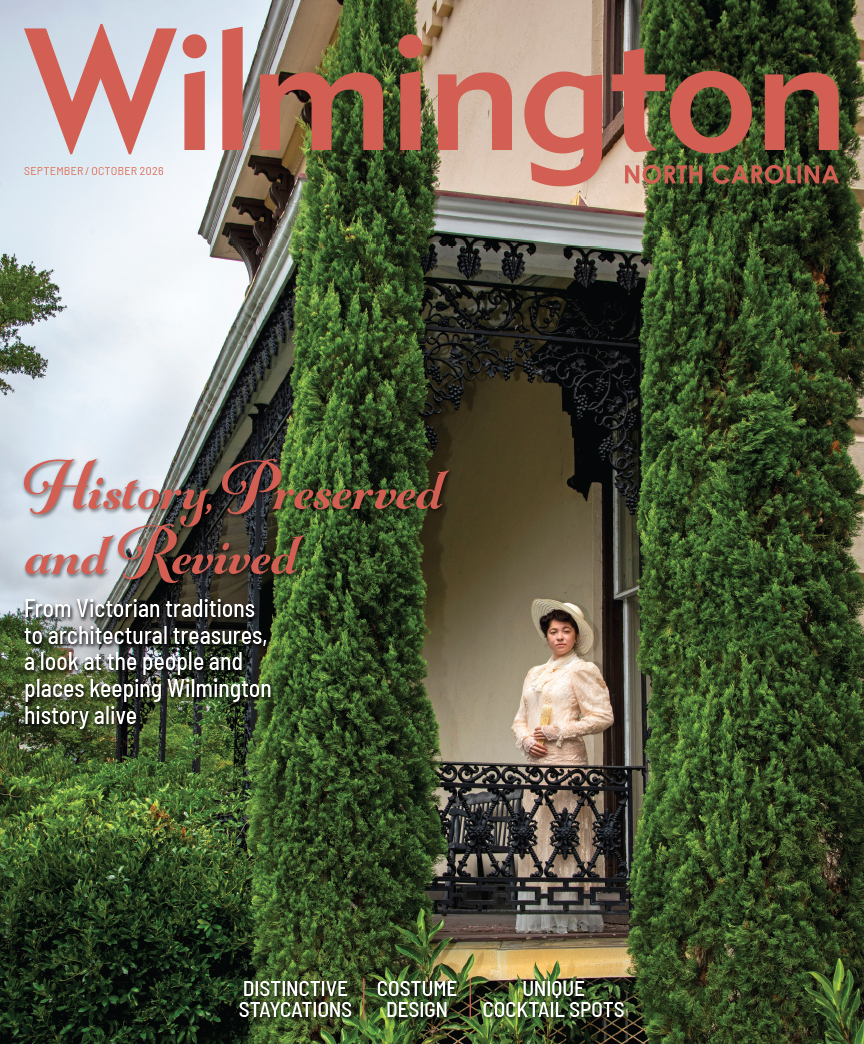
Wearing period-inspired costumes, Olson shares a few customs of a well-mannered Victorian woman. Some authentic garments from the era are on display, while others are carefully stored behind the scenes.
A Victorian Guide to Social Survival
Today, visiting a friend’s home might be as easy as throwing on a pair of jeans and a T-shirt, texting them “I’m here,” then walking straight through the front door. But nearly two hundred years ago, during the height of a period defined by strict rules and sophisticated etiquette, even a friendly get-together wasn’t quite so simple. Those who failed to follow society’s unspoken standards risked becoming a public embarrassment and could lose the respectability of their reputation. Victorian etiquette was more than good manners—it was a language that communicated respectability, social status, morality and even one’s prospects for marriage.
Calling Cards and Social Calls
When the Victorian era began in 1837, stationery known as calling cards had become de rigueur for properly introducing oneself. To visit an acquaintance, a friend, and particularly to introduce oneself to a stranger, Victorians had to offer what looked like a modern business card at the door.
Calling cards would carry your name, and sometimes a short message detailing the reason for your visit. If a resident wasn’t at home when you called, the maid or another servant would take your card and leave it in an ornate tray by the door for the master and mistress of the house to see later. Having a tray full of calling cards was a marker of status among Victorians, with bonus points for how influential the names on the cards were. Leaving a card was the customary way to receive an invitation to dinners or parties later, and failing to respond to a calling card within a few days was considered poor manners. Declining a card, of course, came with its own subtle message—the caller might think you had some reason to be unfriendly, such as believing they were caught up with the latest neighborhood scandal.
If a resident was home, the servant who accepted your card at the door would announce you on most occasions to the lady of the house, whose responsibilities included welcoming guests. She could then decide whether or not to receive you based on the card you presented.
Callers could also indicate the purpose of their visit by folding specific corners of their calling card. For example, an upper left-hand fold signified a condolence call, while another corner indicated a congratulatory visit.
The design of the card also mattered; unadorned, handwritten cards on white or cream-colored paper showed you were a reserved and dignified guest, while ornate and colorfully designed cards showed you had fashion and flair.
With any luck, the lady of the house would invite you in and have you shown into the formal parlor, where she and other family members would rise to greet you. There were countless considerations to determine where you should be positioned in the room depending on your gender, age and social status. The sofa was mostly for important friends and non-family members, and proximity to the hostess was also a key indicator of your intimacy and rank.
Once you had successfully navigated the ritual of a social call, another challenge awaited—surviving tea and dinner without committing an embarrassing faux pas.
Dining with Dignity
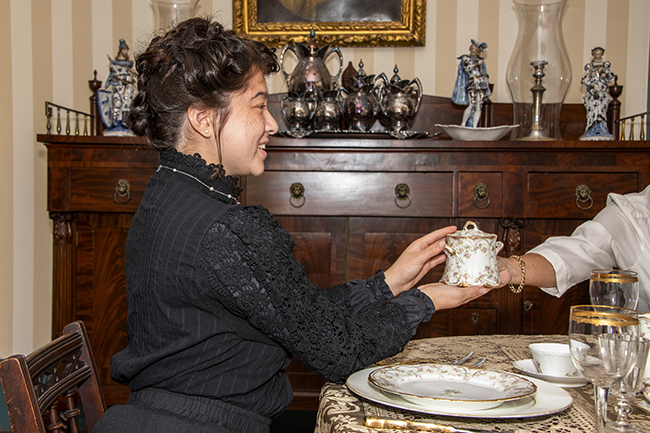
Morning calls were usually quite short to avoid intruding on a family’s breakfast time, but if you visited a house in the afternoon, you would likely be offered tea in the parlor or drawing room. As with many aspects of Victorian life, afternoon tea followed a strict set of rituals. Hostesses carefully set the table with their finest china, neatly folded napkins and elegant serving pieces before pouring tea for each guest, leaving room for milk, sugar or lemon. Callers, in turn, were expected to sip quietly and gracefully, keeping their eyes lowered to the cup rather than looking over its rim. Above all, good manners required silence—whether stirring tea or setting a cup on its saucer, you had to avoid clinking the spoon against the china or making unnecessary noise. Since most social calls took place between late morning and early afternoon, both host and guest were expected to wear modest, high-necked day dresses with little or no jewelry.
Dinnertime called for darker colors and rich jewel tones for the women, paired with elegant but understated jewelry. Much like formal dining etiquette today, napkins were placed in the lap, and hats and gloves were removed before taking a seat at the table. Gentlemen were expected to assist the ladies with their chairs before seating themselves, and no one began eating until every guest had arrived. For that reason, arriving late at a dinner party was considered a serious breach of etiquette.
Most high-society dinners included several courses, sometimes as many as 12 or 13, as a show of the host’s wealth. Guests were expected to recognize the proper fork for each course and use every piece of silverware with effortless grace and complete silence.
Conversation, too, was limited to those sitting directly beside you, never across from you. And all condiments were passed down to the left of the table, unless it only had to travel from one spot to the right. Lastly, it was rude to leave the table earlier than one hour after dining—otherwise, it would look like you just came to eat and nothing more!
Victorian Courtship
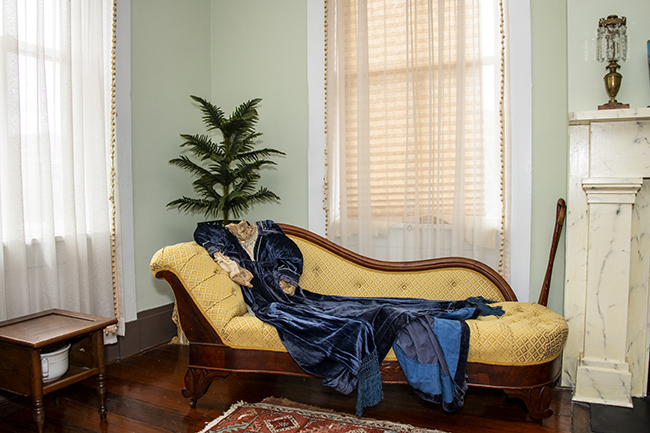
If everyday visits demanded strict etiquette, romance required an even greater mastery of social rules. Courtship in the Victorian era looked very different from modern dating. Young people, especially after making their social debut, were closely chaperoned and rarely left alone together. A respectable gentleman was expected to court only a woman he intended to marry, making romance a formal, highly supervised process. Rather than getting to know one another privately, couples were judged by their conduct before family and society. Young women were encouraged to choose a husband based on how he treated his parents and other ladies, while gentlemen were advised to seek a woman who displayed respect, good character and strong domestic skills.
There were additional rules for courtship: Women were to refuse gifts from a gentleman unless he had proposed, ask their mothers’ permission before meeting a member of the opposite sex and never make obvious public attempts to attract a gentleman’s attention.
Gentlemen also had their own rules to follow. They were expected to stand when a lady entered or left a room, avoid overstaying a visit to her home and offer an arm only when she needed assistance. Even engaged couples were expected to avoid all physical contact until marriage. Because openly expressing affection was considered improper, love letters became one of the few acceptable ways for couples to share their feelings in private, and etiquette dictated that such correspondence remain unread by family and friends.
Although few people today would welcome such rigid expectations, many Victorian customs still survive in modern society. We continue to use table manners, dress appropriately for different occasions and strive to make a good first impression when visiting someone's home. While today's rules are far less formal, they remind us that etiquette has always reflected society's values—and that good manners never truly go out of style.
Jasmine Olson is a sophomore communication studies major at UNC-Chapel Hill with interests in acting, modeling and entertainment.
The Latimer House is open for tours Tuesday through Saturday from 10 a.m. to 2 p.m. The museum also offers specialty evening and seasonal programs throughout the year. For schedules and tickets, visit latimerhouse.org or follow @latimerhousewilmington on Facebook and Instagram.
Fan Language
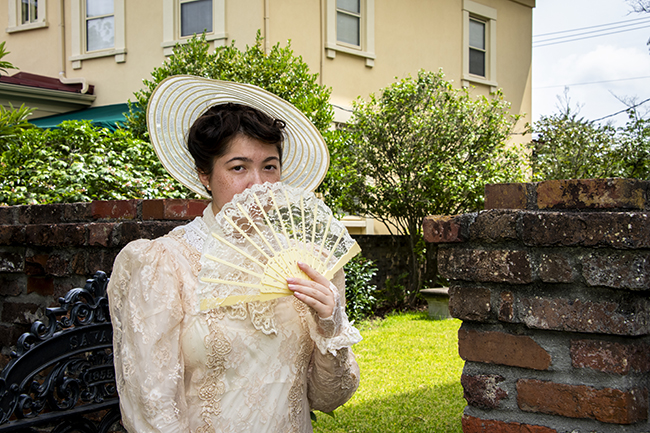
Because it was considered highly improper for Victorians to show any open, romantic affection towards others, young lovers sought clandestine ways of expressing their true feelings. One such method is known as “fan language”, in which the subtle flick of a feathered accessory could spell out secret messages. For example, if a lady dragged her fan across her cheek, it was thought to mean I love you, while tucking a fan behind her ear signaled that she wished to be rid of someone unpleasant. Similarly, holding the fan to her right cheek was supposedly meant to answer yes to a question, while holding the fan to her left cheek meant no. It is important to note, however, that while it is plausible that a woman would use her fan to draw general attention to herself, and perhaps send covert messages with her facial expressions, it is more of a stretch to assume her lover could easily decode her movements. The origins of the “fan language” we think of today are actually derived from a fan maker in Paris, named Duvelleroy, who published a leaflet that assigned certain fan gestures to their meanings. The publication was likely a motivated piece of marketing rather than a true guide for young men and women, but it nonetheless influenced the way Victorians accessorized themselves and acted in public.