Woven Together
01 Sep 2026
Weaving Wonder Basketry brings people together through hands-on classes rooted in traditional fiber arts
Sept-Oct 2026
Written By: Judy Royal
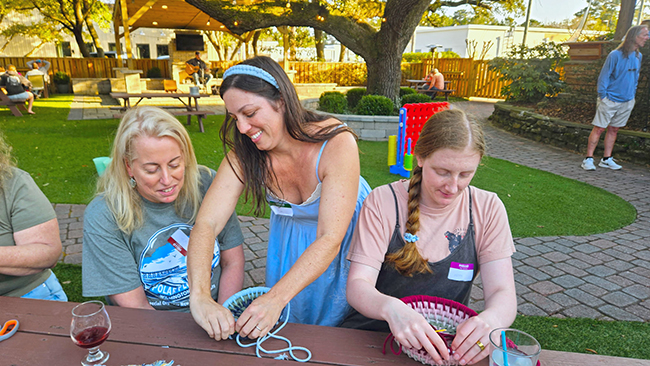
This fall, Wilmington residents will have an opportunity to try their hand at an ancient craft as small businesses act as a time machine of sorts. Around tables at local coffee shops, bakeries and other gathering places, colorful strands of cotton are coiled into baskets as conversations unfold and strangers become acquainted. For fiber arts teacher Star Edwards, the appeal of basketry goes far beyond what participants create with their hands. It offers something increasingly rare.
“Basketry and these traditional arts have been in the hands of so many generations and civilizations of humanity, and I feel there's an innate pull within us towards them,” Edwards says. “It's not just the artform; it's the community. Women used to sit around the fire, coil a basket and share their emotions and lives with each other. We still need that now – not only to have our hands moving in these ways but also to connect our hearts, too. It's a tug of the soul.”
Edwards, who started Weaving Wonder Basketry in Asheville in 2024, relocated to Wilmington with her family following Hurricane Helene in fall of that same year. After about a year of getting settled, she re-established her basketry classes here in the Port City last December. Since then, Edwards says she has taught basketry to 125 students and served a total of 165 people through all her classes.
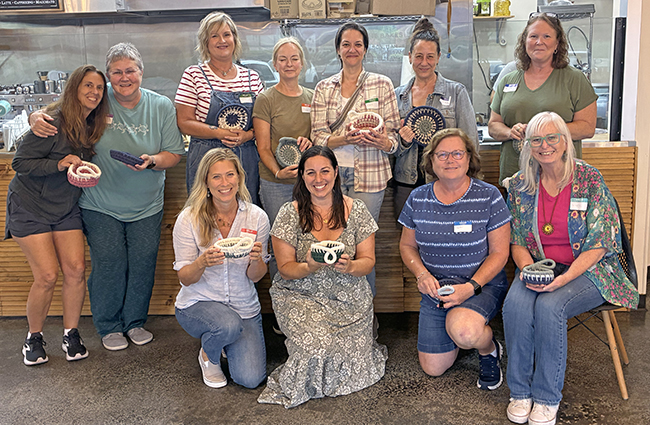
“People in Wilmington are really kind, and this is a real community,” she says. “This feels like home. There’s such a collaborative spirit in the arts community here, and it’s so fun.”
Classes accommodate anywhere from six to 15 students and last from two to three hours. Many sell out, some within 12 hours, Edwards says. In addition to baskets, participants have created dining table centerpieces, valet trays, wet felted flower bouquets, wet felted soap bars, hand-spun yarn and more.
Basketry, however, is the most popular offering, and Edwards thinks it’s the perfect way to slow down and relax in a fast-paced world.
“It’s a sensory thing,” she says. It’s sensory input that our bodies really crave that we don’t get enough of. We’re spending more time on our screens than ever. Our bodies are not meant to tap screens all day.”
The slow art of basketry requires patience, and students are often surprised at how therapeutic it is, she adds.
“I feel like people want to come to these classes mostly for fun, but when I tell them what they are doing for their brain and nervous system they feel it when they walk out,” Edwards says. “The classes are really more of a jovial community atmosphere.”
Partnering with local businesses goes beyond just offering space for the instruction to take place. Classes often include a coffee, pastry, cocktail, frozen yogurt or plant in the ticket, introducing new customers to the establishment.
“It’s really fun to see how my classes can help people discover new businesses,” Edwards says.
Details about classes may be found at weavingwonderbasketry.com. September’s offerings include cotton coiled basketry at The BakeShop by Three Friends Coffee, planter weaving at The Coastal Succulent and felted flower bouquet making at hello, love. In addition, Edwards is offering a two-class series on pine needle basketry at hello, love that will give five hours of step-by-step instruction so students can leave with their own creation. This ancient art form is one Edwards has been especially interested in lately.
In southeastern North Carolina, longleaf pine-needle basketry carries deep cultural significance, with traditions rooted in both Native communities, including the Lumbee and Waccamaw Siouan, and Gullah Geechee culture shaped by descendants of enslaved West and Central Africans. At Poplar Grove, historical interpretation documents enslaved women using locally abundant longleaf pine needles for basketmaking. Today, visitors can explore more of this history at the historic site, where exhibits and programs examine the lives, skills and cultural traditions of the people enslaved there.
“When we moved here and I saw longleaf pines, I just felt like they were calling to me,” she says. “I feel so connected to this land when I make pine needle baskets. It’s one of my favorite things right now.”
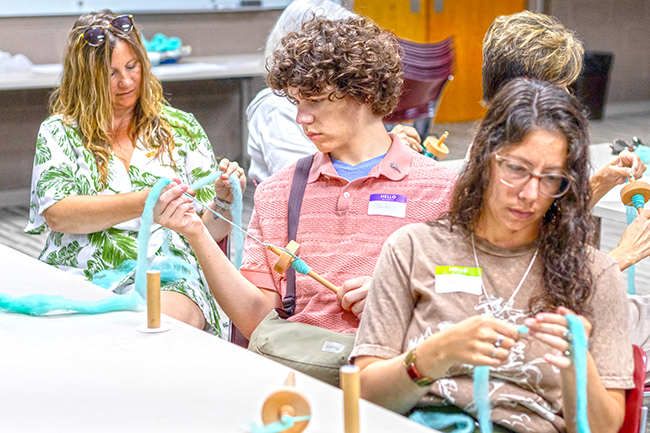
In addition to her fall public class schedule, Edwards will also begin a new role as the handwork teacher at Wild Forest Academy in Leland, where she will create the handwork curriculum including sewing, felting, and basketry for kindergarten through fifth grade. She’s also in the final stages of crafting a program that focuses on Parkinson’s, Alzheimer’s, dementia and stroke patients as well as their caregivers.
Regardless of the setting, Edwards wants participants to take home more than the tangible item they create.
“I hope they leave with peace and joy and the sense that they can do it,” she says. “I feel like that resiliency that you can learn new things no matter how old you are is important.”